Polyaluminum Chlorides are empirically defined by the formula Aln(OH)mCl(3n–m), where 0 < m < 3n. The degree of neutralization or basicity of hydrolyzed Al³⁺ is expressed as the OH/Al molar ratio. This ratio is generally referred to as the number of ligands, hydroxyls, or basicity (r). For Aluminum Chloride (AlCl₃), the r value is “0,” while for Aluminum Hydroxide (Al(OH)₃), the r value is “3.” In Polyaluminum Chlorides, the r value ranges between 0.5 and 2.5. The higher the r value, the more stable the product and the greater the number of polymeric molecules it contains. Therefore, products with a high r value (high basicity) provide maximum coagulation efficiency.
Polyaluminum Chloride solutions are acidic; however, the level of acidity may decrease depending on the r ratio. The total aluminum content is expressed as Al₂O₃, which provides information about the product’s composition and activity. The aluminum content of Polyaluminum Chloride products (as Al₂O₃) ranges between 7% and 24%. Depending on their derivatives, they may contain different inorganic salts. The presence of these inorganic species affects both the quality and the performance of the product.
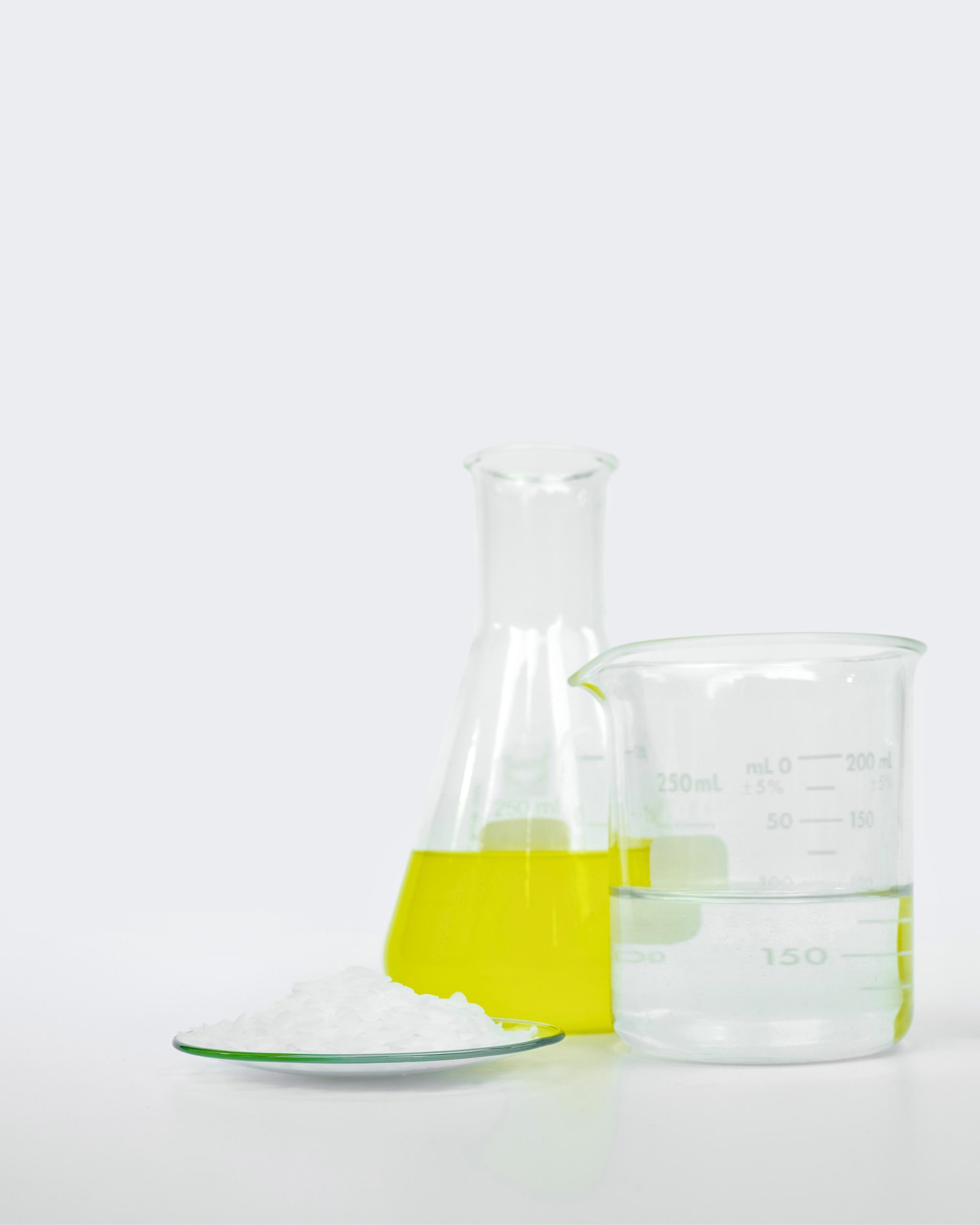
Polyaluminum Chloride (PAC)
| Product Form: | Liquid |
| Appearance: | Clear Liquid |
| Active Substance: | 10-23% Al2O3 |
| Relative Basicity: | 40-80% |
| Density: | 1.1 - 1.4 g/cm³ |
| pH (5% Solution): | 2.5 - 5.5 |
| Viscosity: | < 50 cps |